The Toronto Pearson gold heist is the crime story that shows how a fake fish slip moved $20M in bullion
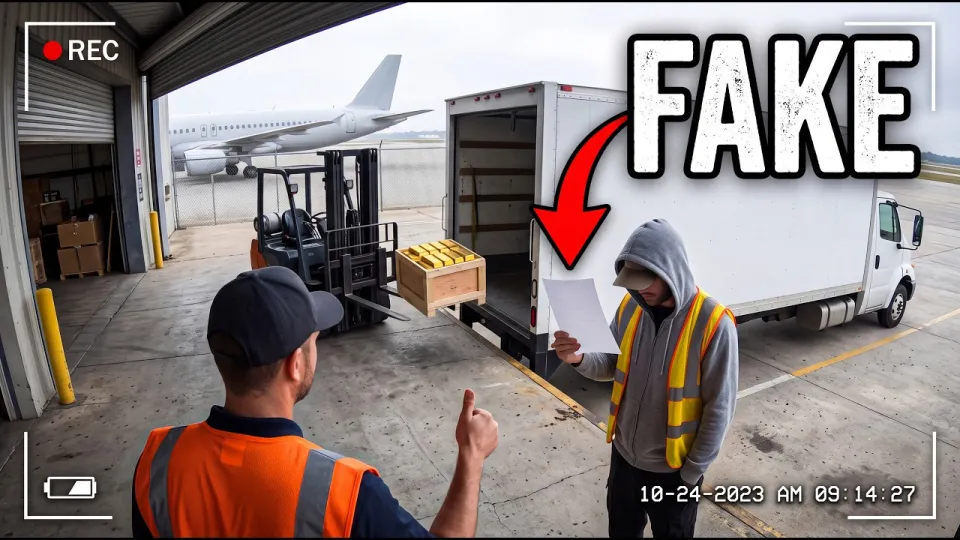
Video: Airport Has No Idea It Just Handed $20M in Gold to Thieves (crime story)
The Toronto Pearson gold heist is a crime story about paperwork, not weapons: thieves took roughly $20 million in gold by driving a white truck to an Air Canada cargo warehouse and handing over a fraudulent pickup slip for a shipment of fish. The real consignment — 6,600 gold bars in one metal container — was released to them, and the airport did not realize what it had handed over until the loss surfaced later.
What made the Pearson cargo heist possible
The heist worked because air cargo moves on trust in documents rather than on trust in people. A flight arriving at Toronto Pearson carried 6,600 gold bars inside a single metal container, and that container entered the same cargo stream as routine freight. The value of the load — about $20 million — did not change the handling procedure: the shipment was logged, stored and released according to paperwork, not according to armed escort.
That is the core vulnerability. A warehouse that processes thousands of consignments a week cannot verify every driver's identity against a manifest by hand, so staff rely on a reference number, a name and a signature. Once a document looks right, the container becomes just another box moving out of the door.
How the fake fish slip worked
The thieves did not break into a vault; they booked a pickup. The sequence, as described in the case, ran through a handful of ordinary steps:
- A man backed a white truck up to the Air Canada cargo warehouse at Toronto Pearson.
- He presented a document to staff claiming a shipment of fish was being collected.
- The fish consignment had, in fact, already been picked up the day before — a detail that should have flagged the slip as invalid.
- The paperwork was accepted, and the gold container was released as if it were the fish.
- The truck left the facility without interference.
The elegance of the trick is that it required no forced entry, no inside knowledge of alarm codes and no violence. It required one plausible document presented at the right counter at the right time, and a facility busy enough that a second pickup for the same consignment did not stop the process.
The procedural gaps behind a $20M loss
Cargo theft at major airports is rarely a single failure; it is a chain of small ones. At Pearson, the chain included several weak links that are common across the industry:
- Paper over identity. A slip can be forged or reused far more easily than a driver can be biometrically verified, and warehouses often accept the document as the credential.
- No duplicate check. A system that flags a consignment already marked as collected would have stopped the release on the spot.
- Value-blind handling. High-value bullion travelled in the same workflow as seafood, with no separate protocol for precious metals.
- Time pressure. Cargo terminals run on turnaround times; a driver waiting at the counter is a problem staff want to clear, not interrogate.
- Delayed discovery. The theft was not interrupted in progress — the discrepancy emerged afterwards, when the absence of the gold was noticed rather than the presence of a suspicious truck.
Each gap is mundane. Together they turn a warehouse into a place where a $20 million container can be signed out by a man in a rented truck.
Why gold is such an attractive cargo target
Gold is the ideal freight for a thief because it is dense, quiet and easy to move. A single metal container holding thousands of bars can be worth more than a building, yet it weighs little enough for a standard vehicle and makes no noise, needs no refrigeration and emits no signal. Unlike cash, bullion does not carry serial numbers that are checked at every handover, and unlike electronics it does not need to be resold in volume to be liquid.
That combination — extreme value per kilogram, weak traceability in transit and routine handling — is why gold shipments have been hit at airports from Johannesburg to Amsterdam. The Pearson case fits a pattern: the target is not the vault but the moment of transfer, when responsibility passes from airline to courier and the paperwork is briefly the only security control in the room.
What investigators and airports took from the case
The immediate lesson for cargo operators is that a document is not an identity. After a loss of this size, the practical fixes are procedural rather than dramatic:
- Verify the driver against the consignment record, not just the slip.
- Flag duplicate or already-collected reference numbers at the counter.
- Separate precious-metals freight into its own release protocol with dual sign-off.
- Log the vehicle, plate and time of every high-value pickup.
- Reconcile high-value shipments at the end of each shift instead of at the end of the week.
None of these measures is exotic. What the Pearson heist showed is that the gap between a secure terminal and an open one is often a single unchecked field in a database, and that thieves understand the paperwork better than the people processing it.
The wider crime story of airport cargo theft
Airport cargo theft is a genre of its own within true crime, because it rarely involves a confrontation. The offenders are planners, forgers and drivers, and the evidence is a stack of paper rather than a crime scene. The Pearson gold heist belongs beside the warehouse frauds, manifest scams and impersonation pickups that recur wherever freight moves faster than verification.
For viewers of true crime documentaries, the appeal is the same as for investigators: the crime is almost invisible while it happens. There is no alarm, no chase and no dramatic confrontation — just a truck leaving a terminal with a container that the system believed was fish. The reconstruction in the Max Crime breakdown follows that logic, tracing the slip, the counter and the gate rather than inventing a shootout.
What the Pearson gold heist leaves behind
The Toronto Pearson case is remembered less for its scale than for its simplicity: 6,600 bars, one container, one white truck and one fraudulent slip for a fish shipment that had already been collected. The airport handed over roughly $20 million in gold because the procedure it followed was designed to move freight, not to doubt it. The investigation that followed turned on documents, timestamps and the question of who signed what.
Max Crime examines exactly this kind of case, rebuilding the sequence of small decisions that let an ordinary-looking pickup become a headline loss. The takeaway for anyone handling high-value cargo is blunt: if a slip can release a container, then the slip is the security system — and it can be forged.
Key takeaways
- An Air Canada flight landed at Toronto Pearson with 6,600 gold bars packed into a single metal container.
- The shipment's value was roughly $20 million, moved as ordinary air cargo rather than under armed guard.
- A man drove a white truck to the airline's cargo warehouse and presented a paper slip for a fish shipment.
- The fish consignment had already been collected the day before, yet the paperwork was accepted.
- No alarm, no chase: the container left the facility on a normal pickup and the loss was discovered later.
Source: Airport Has No Idea It Just Handed $20M in Gold to Thieves (crime story) · Markdown version
Questions & answers
How much gold was stolen at Toronto Pearson?
The shipment contained 6,600 gold bars inside a single metal container, valued at roughly $20 million. It arrived on an Air Canada flight and was later released from the airline's cargo warehouse to a man driving a white truck.
How did the thieves get the gold out of the airport?
They used a fraudulent pickup document presented as if it were for a shipment of fish. That fish consignment had already been collected the day before, but the slip was accepted and the gold container was released as normal cargo.
Why was the theft not stopped at the warehouse?
Cargo terminals rely on paperwork and reference numbers rather than on verifying the driver's identity or the consignment's status. A duplicate or already-collected reference was not flagged, and high-value bullion moved through the same workflow as ordinary freight.
What can airports change to prevent similar cargo theft?
Operators can verify drivers against consignment records, flag duplicate reference numbers at the counter, give precious-metals freight its own dual sign-off protocol and reconcile high-value shipments at the end of every shift rather than later.